⚡ Why PUFAs Are So Unstable — And How Oxidised Oils May Harm Your Health
If you’ve been hearing more about seed oils and PUFAs lately, you’re not alone. Scientists, nutritionists, and health writers are increasingly debating their impact on long-term health — especially as we get older.
One of the biggest concerns? 🧪 PUFAs are chemically unstable — and that instability may lead to oxidative stress, inflammation, and accelerated ageing.
🥥 What Makes PUFAs Different
Not all fats behave the same way in your body — or in the kitchen:
| Type of Fat | Stability | Examples |
|---|---|---|
| 🧈 Saturated fats | ✅ Very stable | Butter, ghee, coconut oil |
| 🫒 Monounsaturated fats | 👍 Fairly stable | Olive oil, avocado oil |
| 🌻 Polyunsaturated fats (PUFAs) | ⚠️ Unstable | Rapeseed, sunflower, soybean oils |
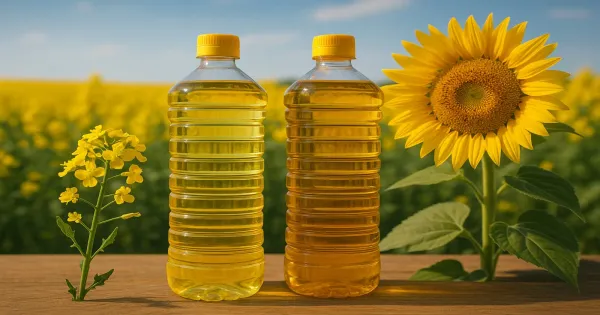
PUFAs are found in seed oils like rapeseed, sunflower, soybean, safflower, corn, and grapeseed oil. They’re rich in omega-6 fatty acids, which are essential in small amounts — but too much, especially when oxidised, may be problematic.
🔥 Why PUFAs Break Down So Easily
PUFAs have multiple double bonds in their molecular structure. While that makes them versatile in nature, it also makes them fragile:
- 🔥 Heat → deep-frying, roasting, and baking speed up oxidation
- 💡 Light → clear plastic bottles or shelf exposure can trigger degradation
- 🌬️ Air → long storage times allow oils to become rancid
Once PUFAs oxidise, they produce toxic by-products like:
- 🧩 Lipid peroxides → unstable molecules that damage cell membranes
- 🧨 Aldehydes → compounds linked to inflammation and oxidative stress
⚠️ Why This Matters Even More After 50
As we age, our natural antioxidant defences decline. That means our bodies are less efficient at neutralising oxidative damage. Diets high in unstable PUFAs may:
- 🔄 Increase oxidative stress → speeding up cellular ageing
- 🩸 Promote chronic inflammation → linked to joint pain, heart disease, and gut problems
- ⚡ Affect metabolic health → potentially disrupting insulin sensitivity and fat storage
🧠 Quick Takeaway:
After 50, reducing your exposure to oxidised oils can help protect your cells, support your metabolism, and keep inflammation in check.
🛒 Practical Tips to Limit PUFA Damage
You don’t have to eliminate all seed oils, but a few small tweaks can make a big difference:
Choose more stable cooking fats:
- 🫒 Olive oil → great for salads & light sautéing
- 🥑 Avocado oil → excellent at higher heat
- 🥥 Coconut oil → stable and ideal for baking/frying
- 🧈 Butter or ghee → nutrient-rich and heat-resistant
Be PUFA-smart when eating out:
- Avoid repeatedly fried foods 🍟
- Watch for “vegetable oils” in dressings, sauces, and spreads 🥗
Restore your omega balance:
- Eat more omega-3-rich foods like oily fish 🐟
- Add flax, chia, and walnuts 🌰
- Consider a high-quality omega-3 supplement if needed
🌿 The Bottom Line
PUFAs aren’t “bad” in themselves — we need some, especially omega-3s. But our modern diets are overloaded with unstable, highly processed omega-6-rich seed oils, and our bodies aren’t designed to handle so much oxidation.
By understanding how PUFAs behave — in your kitchen and inside your body — you can make smarter, healthier choices that protect your heart, brain, and joints as you age.
📘 Next in the Series
This article is part of our Seed Oils & PUFAs Series at Over50Health:
- 🥗 Why I Cut Seed Oils From My Diet
- ⚡ Why PUFAs Are So Unstable ← You’re here!
- 🥥 Seed Oils vs Traditional Fats - coming soon
- 🤔 Are Seed Oils Upsetting Your Gut? - coming soon
- 🧠 The Best Oils & Fats for Over-50s - coming soon